

New Study Ranks Top States for Homesteading, Led by Texas, Montana and Wyoming
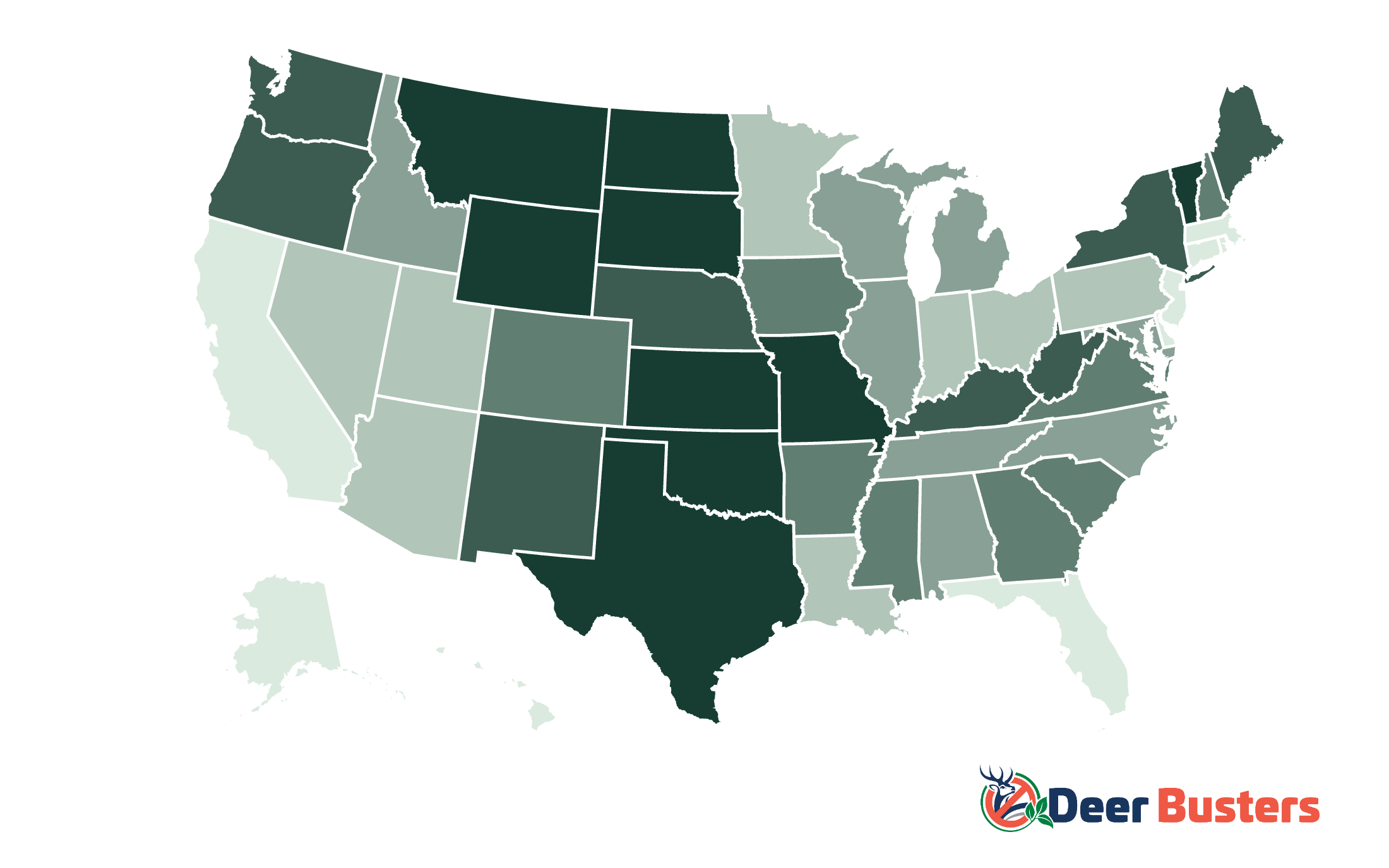
New DeerBusters research reveals where land, climate, and affordability give homesteaders the best chance to succeed.
The analysis ranked all 50 states using USDA farmland data, land listing inventory, Census acreage data, NOAA precipitation data & Google search interest.
WAYNESBORO, PA, UNITED STATES, June 22, 2026 /EINPresswire.com/ -- As grocery prices and cost-of-living pressures continue rising, more Americans are turning toward homesteading as a way to gain greater control over food, land, and long-term expenses. New research from DeerBusters finds where someone chooses to homestead can significantly affect whether that goal is realistically achievable.
The study analyzed all 50 states using factors tied to homesteading feasibility, including farmland cost, land availability, acreage per capita, climate suitability, and search interest. Texas ranked first overall, followed by Montana, Wyoming, Vermont, and North Dakota.
The findings suggest that successful homesteading depends on more than affordability alone. States that performed best combined lower land costs with available inventory, workable growing conditions, and room for long-term expansion.
“Successful homesteading comes down to balance,” said Mark Dayhoff, COO of Trident Enterprises, the parent company of DeerBusters. “The strongest states were not just affordable. They also had land available, workable growing conditions, and room to expand. That’s what makes the opportunity real.”
Key Takeaways
• Texas, Montana, Wyoming, Vermont, and North Dakota ranked as the best states for homesteading
• Hawaii, Rhode Island, and Alaska ranked among the least favorable states for homesteading
• Texas had the most farms and ranches for sale, with 8,367 listings
• New Mexico had the cheapest farmland at $725 per acre
• Rhode Island had the most expensive farmland at $22,500 per acre
• Montana, Wyoming, & North Dakota offered the most land per person, with roughly 45 to 50 acres
• Ohio and Illinois had the most balanced growing conditions based on annual precipitation
• Vermont had the highest homesteading search interest, followed by Montana and Oregon
Texas Ranked Highest for Homesteading Potential
Texas earned the highest overall score in the study due to its combination of affordable land, strong inventory, acreage availability, and established agricultural infrastructure.
With 8,367 active farms and ranches listed for sale during data collection, Texas offered significantly more available inventory than any other state. Arizona followed with 1,543 listings, while Oklahoma had 1,438.
Montana and Wyoming also ranked highly because of their affordable farmland and high acreage per capita, giving homesteaders more room to grow with less competition for land.
Vermont and North Dakota rounded out the top five. Vermont stood out for favorable growing conditions and high homesteading interest, while North Dakota benefited from strong land availability and affordability.
Affordable Land Alone Is Not Enough
The research found that low farmland prices do not automatically make a state ideal for homesteading.
“Low land cost alone is not enough,” Dayhoff said. “A place can look affordable on paper, but if inventory is thin or rainfall is too low, the long-term cost goes up fast. The states that ranked highest offered a more complete setup for success.”
New Mexico had the lowest average farmland cost in the country at $725 per acre, followed by Wyoming at $1,000, Nevada at $1,200, and Montana at $1,230.
However, states with limited land inventory or difficult growing conditions often scored lower overall despite affordability.
By contrast, coastal and densely populated states faced major affordability barriers. Rhode Island had the highest farmland cost at $22,500 per acre, followed by New Jersey, Massachusetts, and California.
Land Availability Continues to Shape Access
Beyond pricing, land access itself emerged as a major factor in homesteading feasibility.
Montana, Wyoming, North Dakota, and South Dakota led the nation in acreage per capita, offering some of the least competition for land in the country.
Texas also stood out for total agricultural infrastructure, with roughly 125 million acres of farmland and more than 229,000 farms statewide.
The study found that states with established agricultural systems may offer long-term advantages for homesteaders, including easier access to farm supply stores, livestock veterinarians, repair services, and local farming communities.
Climate Conditions Also Influence Success
Climate suitability played a major role in determining where homesteading is easiest to sustain.
Ohio and Illinois recorded annual precipitation levels closest to the study’s 40-inch benchmark for balanced growing conditions. Washington, Vermont, Maine, Missouri, and New York also ranked favorably for rainfall.
States with extremely dry climates presented additional challenges.
Nevada recorded the lowest annual precipitation at just 9.5 inches, while Wyoming and Utah also received minimal rainfall. In those states, homesteaders may need to invest in irrigation systems, water storage infrastructure, or drought-resistant crops to maintain productivity.
The study also noted that regions with strong growing conditions often face higher wildlife pressure from deer and other animals that can damage crops and gardens.
Interest in Homesteading Remains Strong
Google Trends data showed particularly strong homesteading interest in states where affordability and land access remain relatively realistic.
Vermont ranked highest for homesteading-related search interest, followed by Montana, Oregon, Maine, Idaho, Tennessee, West Virginia, and Kentucky.
Many of those states also performed well overall in the rankings, suggesting that interest tends to grow where residents feel homesteading is realistically attainable.
Building a Homestead Requires Long-Term Planning
While rankings highlight where homesteading may be easier to start, the research emphasized that long-term success depends on preparation, infrastructure, and ongoing maintenance.
The study recommends aspiring homesteaders consider not just land prices, but also climate, water access, local agricultural infrastructure, wildlife protection, and expansion potential before purchasing property.
“The data shows that aspiring homesteaders should think bigger than price alone,” Dayhoff said. “Start with states where land cost, availability, and climate are working together. Look for real inventory, enough acreage to grow over time, and conditions that won’t force major extra costs right away. And if you’re buying in a drier region, budget for water infrastructure from day one. The strongest setup is not just affordable land — it’s affordable land in a place where you can actually make the homestead work.”
The full study is available at:
https://deerbusters.com/blog-and-tips/best-states-for-homesteading
About
DeerBusters provides fencing solutions designed to help protect gardens, crops, and agricultural land from deer and other wildlife. The company supports gardeners, growers, and homesteaders with products designed to help maintain productive and sustainable outdoor spaces.
Taylor Jay
Resolve Marketing
email us here
Visit us on social media:
LinkedIn
Instagram
Facebook
X
Legal Disclaimer:
EIN Presswire provides this news content "as is" without warranty of any kind. We do not accept any responsibility or liability for the accuracy, content, images, videos, licenses, completeness, legality, or reliability of the information contained in this article. If you have any complaints or copyright issues related to this article, kindly contact the author above.
